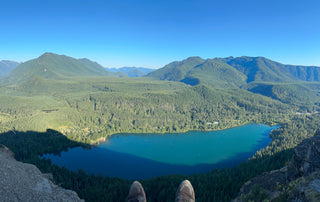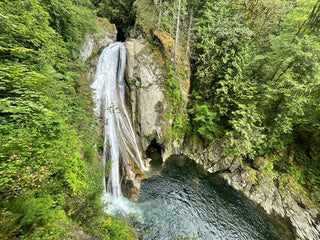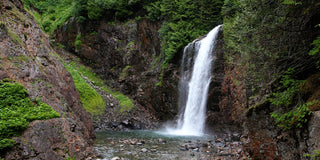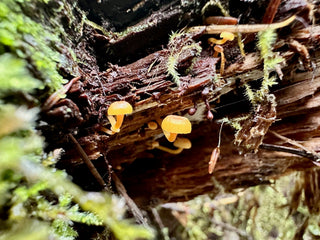
Want to get a little more off the grid? These options offer more solitude and flexibility, but come with fewer amenities and more responsibility.
These options are not recommended for folks with mobility considerations.
National Forests & State Forests
e.g., Mount Baker-Snoqualmie National Forest, Capitol State Forest
National and state forests balance recreation with conservation and resource use. You can hike and camp alongside working landscapes like logging and grazing.
Agency
- National forests: United States Forest Service
- State forests: Washington Department of Natural Resources
Planning & Camping Reservations
- fs.usda.gov (National Forests) Cabin reservations, developed and dispersed campground options
- dnr.wa.gov (State Forests) Dispersed camping. Access is free and first-come, first-served.
Required Pass
- Northwest Forest Pass (National Forest) or Discovery Pass (State Forest) may be required.
- Access ranges from paved roads to rough forest roads. Roads are typically less maintained and may have potholes, blowdowns, etc. Cell service can be limited (download map ahead of time).
Restrooms
Most do not have.
Crowds
Generally low, especially beyond main trailheads. Popular hikes and easy-access areas can still be busy.
Vibe
Rugged, less curated, more self-directed. Quieter, more remote, and less managed than parks.
What to Expect
A mix of developed and minimally maintained areas. Trails & campsites may be less maintained, with downed trees, washouts, or unclear junctions. You may encounter other land uses (logging activity, hunting seasons, ORVs in some areas). Campers likely will not have access to potable water and must pack out their garbage.
Amenities & Navigation
Limited infrastructure outside developed sites. Signage can be inconsistent. Navigation often requires a map, GPS, or route awareness. Cell service is typically unreliable.
Activities
Hiking, backpacking, dispersed camping, Hunting, fishing, and (in some areas) motorized recreation. Wide range depending on the specific zone and regulations.
Hiker Level
Intermediate / Advanced with beginner options near developed areas.
Good to know / risk considerations
- Greater self-reliance required than in parks. Route-finding, navigation, and decision-making matter more here.
- Conditions can change without notice (weather, trail damage, road access).
- Quieter, more isolated settings. Fewer immediate resources if something goes wrong.